We’ve been wanting a place to talk about how we actually build. Not just what, but why. So we built a place for that conversation. Welcome to The Plot. For our first post, we’re starting with something that matters more to us with every new project we evaluate: sustainability. We believe that a great place to live or invest in isn’t just beautifully designed or strategically located. It’s been thought through carefully, and the decisions made during development set residents, guests, and the surrounding community up for a better future.
We’re at different stages with different projects currently, and specific details are still taking shape for each one. But what we can say is that responsible building practices are something we take seriously across the board, whether we’re working through early design on a new development or deep into planning.
Designing for the Future
At Relevant Partners, we’re designing for the future, one way we’re doing that is by setting aggressive goals for renewable energy usage across our projects. The largest of these goals being a 50% renewable energy target for our COVA Coachella Valley project. COVA is our most ambitious project to date, and in many ways it’s where our sustainability thinking has gone the deepest. Hitting that target isn’t going to be a single silver bullet, we’re exploring and combining a few different strategies to meet the goal.
Solar: The Obvious Starting Point
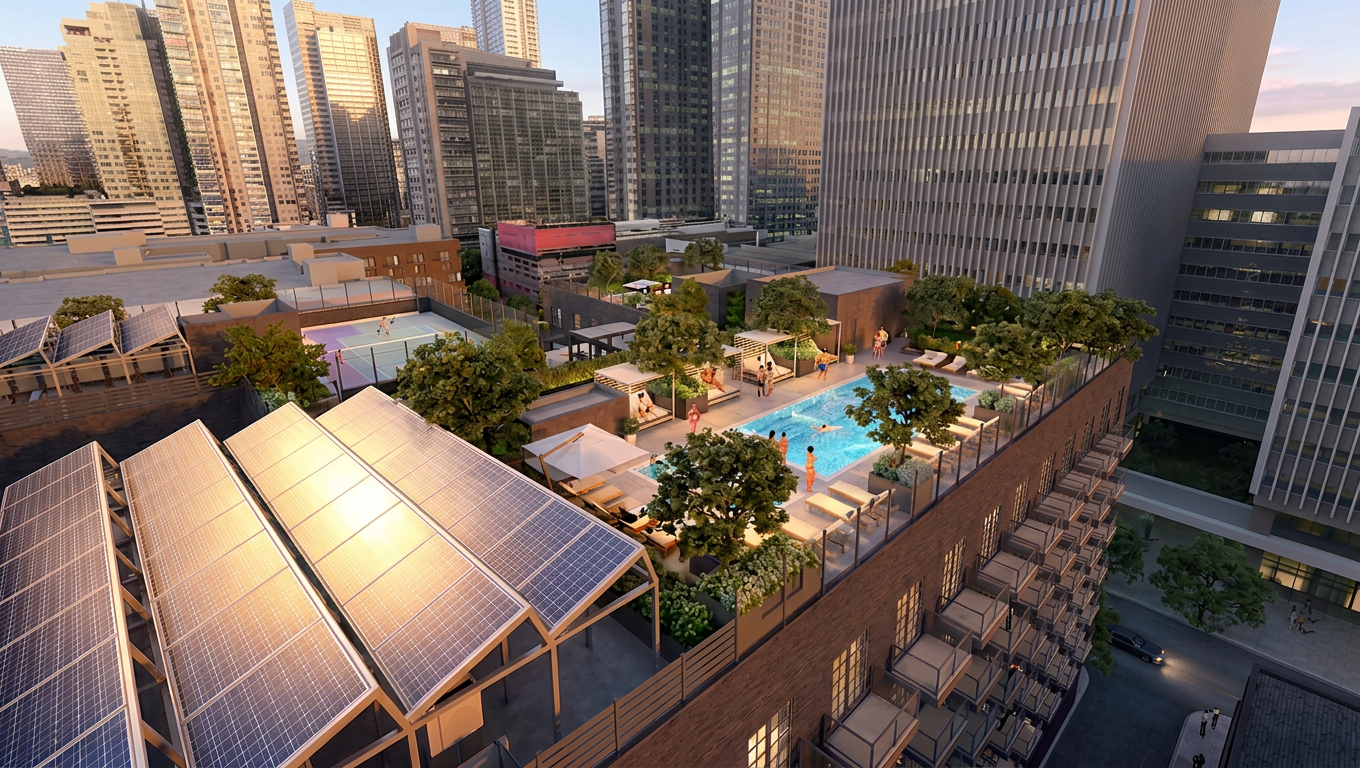
In Southern California, solar is the natural first move, because sunshine is everywhere. We are exploring utilizing solar to some degree in all our current projects. Our energy modeling targets for COVA rely primarily on solar, integrated across residential rooftops, the hospitality buildings, and support areas throughout the site. Done right, this isn’t just an environmental checkbox. It’s a smart infrastructure decision for a project that will draw significant energy demand over its lifetime.
Geothermal: The Part Most People Don’t Know About
The Coachella Valley is a place most people associate with heat, festivals, and escape. What you might not know about it though, is that it’s one of the most energy-rich environments in the country. Here’s something that might surprise you: California has two of the largest geothermal reservoirs in the United States, and the Salton Sea resource area, which sits close to where COVA is being developed, is one of them. With an estimated generation capability of 2,200 MW, the state is actively expanding geothermal energy development in its desert regions as part of its push toward carbon neutrality by 2045.
For COVA, we’re exploring how to put geothermal to work in a way that’s specific to our site. The primary application we’re evaluating centers around the lagoon. By running a geothermal loop system beneath the surrounding landscaped areas, we can use the ground itself as a thermal medium to help regulate the lagoon’s water temperature throughout the year.
That might sound like a niche detail, but the ripple effects are significant. When you stabilize a large water feature like the lagoon thermally, you reduce the need for the energy-hungry mechanical systems that would otherwise handle that job. The geothermal loop can absorb and redistribute heat across the site, flattening the peaks and valleys of energy demand rather than trying to meet them all at once through the grid.
The bigger picture here is a district-scale energy strategy where the lagoon, the ground systems, and the buildings aren’t operating independently. They’re part of a shared system. That means lower peak electrical demand across the entire site, which matters especially given local power constraints in the region. It also means better overall efficiency, and potentially reduced infrastructure requirements tied to peak load.
This is still being evaluated technically, and we want to be clear about that. But the intent is sound, and the potential is real.
Passive Design: Demand Reduction from the Ground Up
On the architectural side, our design team is working through a set of strategies that are less flashy but just as important. These are the decisions that lower a building’s baseline energy demand before any renewable system even comes into the picture.
Window-to-wall ratios optimized for daylight without excessive heat gain. Building orientation and massing designed to reduce direct solar exposure. Integrated shading through overhangs, screens, and landscaping. High-performance envelopes with better insulation and glazing. Natural ventilation where it’s feasible.
The logic is straightforward: the less energy a building needs in the first place, the further the renewable supply goes. Solar covering 50% of a well-designed building is a meaningfully better outcome than solar covering 50% of one that wasn’t.
The Broader Commitment
COVA is where we’ve been able to go the most specific and intentional about sustainability, but the orientation toward responsible development, toward thinking about long-term efficiency, durability, and environmental consideration, is something we carry into all of our work, including our other projects like 845 S Olive and 1200 Olive in downtown Los Angeles.
The specifics vary. The commitment doesn’t.
We’re building places we’re proud of. Places that should stand up not just to the market but to time. And we think doing that well means taking the planet seriously, not as an afterthought but as part of the foundation.
As the conversation around sustainable development keeps evolving, we plan to keep evolving with it. More to share as these projects progress, follow Relevant Partners for more on the ideas behind the places we’re creating.